
Why NRI Investors Prefer DLF Properties in India
Three years ago, NRIs made up about 5% of DLF home sales. Today, that number has crossed 32%. Between April and December 2025 alone, overseas Indians bought DLF properties worth ₹5,247 crores.
That not a marketing claim. It comes straight from DLF own investor presentation filed with the stock exchange.
So what changed? Why are Indians living in the US, UAE, Singapore, and the UK putting serious money into DLF projects instead of spreading it across other developers? I have spent time going through the numbers, the projects, and what NRI buyers themselves say. Here whats actually driving it.
The Numbers First: NRI Investment in DLF Is Growing Fast
Lets start with the data, because it tells the story better than any brochure.
DLF NRI sales share moved from roughly 2-3% in FY21 to 14% in FY23, then 23% in FY24, 27% in FY25, and over 32% in the first nine months of FY26. For context, property consultants say NRIs typically contribute 10-15% of sales across Indias top seven housing markets. DLF is pulling double that.
Individual projects show the same pattern. When DLF Privana West in Gurugram launched, it sold out in three days, and nearly 28% of those bookings came from NRIs. About 38% of those NRI buyers were based in the United States, 30% in Southeast Asia, and the rest spread across the Middle East, Africa, and the UK.
Numbers like that dont happen by accident. There are real reasons behind them.
Brand Trust Matters More When You Are 8,000 Kilometers Away
Real Appreciation, Not Just Promises
RERA, Clean Paperwork, and Transparent Dealings
Services Built for People Who Are not in India
The Right Locations for NRI Money
Emotional Connection, Backed by Practical Logic
If you live in Gurugram, you can drive past a construction site every weekend and check progress yourself. If you live in New Jersey or Dubai, you cant
Thats the core of why NRIs gravitate toward DLF. When you are buying property in India from abroad, the developers track record is your only real safety net. DLF has been building since 1946, developed large parts of Gurugram from scratch, and is India largest listed real estate company. Delayed possession and stalled projects, the two things NRI buyers fear most, are far less likely with a developer of this size and financial strength.
NRIs invest for returns, and DLF luxury projects have delivered some of the strongest capital appreciation in Indian real estate.
The clearest example is The Dahlias in Gurugram. Launched in October 2024, the project sold around 220 apartments for ₹15,716 crores by December 2025. Pricing for south-facing residences is now approaching ₹1 lakh per square foot, and two penthouses have reportedly sold at ₹150 crores each. DLF earlier flagship, The Camellias, took nearly a decade to reach resale values of ₹40-80 crore per apartment. The Dahlias got close to that pricing in about 18 months.
Not every DLF project is an ultra-luxury trophy asset, of course. But the pattern holds across their premium portfolio: strong launch demand, quick sell-outs, and healthy resale markets. For an NRI comparing this against fixed deposits or overseas investments, the math often works in favour of Indian real estate especially with the rupees depreciation quietly boosting their purchasing power in dollars, dirhams, or pounds.
Property fraud is the number one worry for NRI investors, and its a fair one. Disputed titles, unapproved layouts, and vanishing builders have burned plenty of overseas buyers over the years.
DLF projects are RERA-registered, which gives buyers legal recourse, defined possession timelines, and access to project details on state RERA portals. Beyond the legal minimum, DLF record-keeping and title clarity are a big part of its pitch to NRIs. The company has publicly said it welcomes random checks on its documentation. Whether or not you take that at face value, the practical reality is that a listed company answerable to SEBI, shareholders, and RERA has far less room to cut corners than an unlisted local builder.
For an NRI signing documents through a Power of Attorney from another continent, that layer of accountability is worth a lot.
Here something that gets less attention but matters enormously: what happens after you buy.
An NRI who purchases a flat in Gurugram needs someone to maintain it, rent it out, and eventually help sell it. DLF has built in-house hospitality, rental management, and re-trade (resale) services specifically for this. The company also runs dedicated NRI outreach teams across time zones in the US, Gulf countries, Southeast Asia, Australia, and Canada, so a buyer in California is not stuck emailing a sales office that replies at 3 a.m. their time.
DLF projects sit in exactly the markets NRIs want: Gurugram (especially Golf Course Road, DLF Phase 5, and the Privana corridor along the Southern Peripheral Road), Mumbai, Goa, and the Chandigarh tri-city area.
Gurugram in particular works for NRIs for practical reasons. Its next to Delhi international airport, its where many of their employers (or former employers) have offices, and it has the social infrastructure-international schools, hospitals, golf courses, malls-that makes a property usable as a future home, not just an investment. Many NRI buyers today are younger, globally mobile families buying a base in India for eventual return or for parents, and Gurugram fits that plan better than most cities.
There also the part spreadsheets dont capture. For most NRIs, owning a home in India is not purely financial. Its a hedge, a retirement plan, a place for ageing parents, and honestly, a bit of belonging. DLF has positioned itself as the safe way to act on that emotion; you get the connection to home without the anxiety of wondering whether your money is safe.
That combination of sentiment plus security is hard for competitors to match, and it shows in the repeat purchases. Plenty of NRI buyers in newer DLF projects already own an older DLF property.
A Quick Word of Balance
None of this means DLF is automatically the right choice for every NRI. Their premium and luxury focus means entry prices are high; you wont find much affordable inventory. Popular launches sell out in days, sometimes before overseas buyers can complete their due diligence. And like all real estate, prices that have run up quickly can also cool. Talk to a financial advisor, verify RERA registration for the specific project, and understand FEMA rules and TDS obligations before wiring money.
But if the question is why NRIs prefer DLF, the answer is straightforward: it removes most of the risks that make buying property in India from abroad scary.
FAQs: NRI Investment in DLF Properties
Can NRIs legally buy DLF properties in India?
Yes. Under FEMA rules, NRIs and OCIs can buy residential and commercial property in India without any special permission from the RBI. The only restrictions are on agricultural land, plantations, and farmhouses
Payments must come through NRE, NRO, or FCNR accounts or normal banking channels.
Which DLF projects are most popular with NRI buyers?
Recent favourites include The Dahlias and The Camellias on Golf Course Road, and the Privana series (Privana West and Privana South) in Gurugram, where NRIs made up 25-28% of bookings. DLF upcoming Mumbai project and Goa villas are also drawing strong overseas interest.
Do NRIs get home loans for DLF properties?
Yes. Most major Indian banks and housing finance companies offer home loans to NRIs, typically covering 75-80% of the property value. You will need proof of income from your country of residence, and the loan is repaid through your NRE/NRO account.
What taxes do NRIs pay when buying or selling DLF property?
When buying, NRIs pay the same stamp duty and registration charges as residents. When selling, capital gains tax applies; long-term gains (property held over 24 months) are taxed at 12.5%, and the buyer must deduct TDS. Many NRIs can claim relief under Double Taxation Avoidance Agreements. Consult a tax advisor for your specific country.
Can I manage a DLF property from abroad?
Yes, and this is a big part of DLF appeal. The company offers rental management and resale support, and you can authorise a family member through a registered Power of Attorney for registration and possession formalities.
Is DLF property a good investment for NRIs in 2026?
The track record is strong projects like The Dahlias have appreciated sharply, and NRI participation in DLF sales has grown from 5% to over 32% in three years. That said, past appreciation does not guarantee future returns, and luxury real estate carries concentration risk. Treat it as a long-term holding, not a quick flip.
Compare that with buying from a smaller developer, where post-possession support usually means a WhatsApp number that stops responding. For NRIs, the ongoing service is often the deciding factor, not the apartment itself.
Sources: DLF investor presentations (BSE filings), Business Standard, Free Press Journal, and public statements by DLF management (2024-2026). Figures accurate as of mid-2026.
Recent Articles
Luxury Senior Living in Gurgaon: A Complete Guide for Homebuyers (2026)
Jul 27, 2026
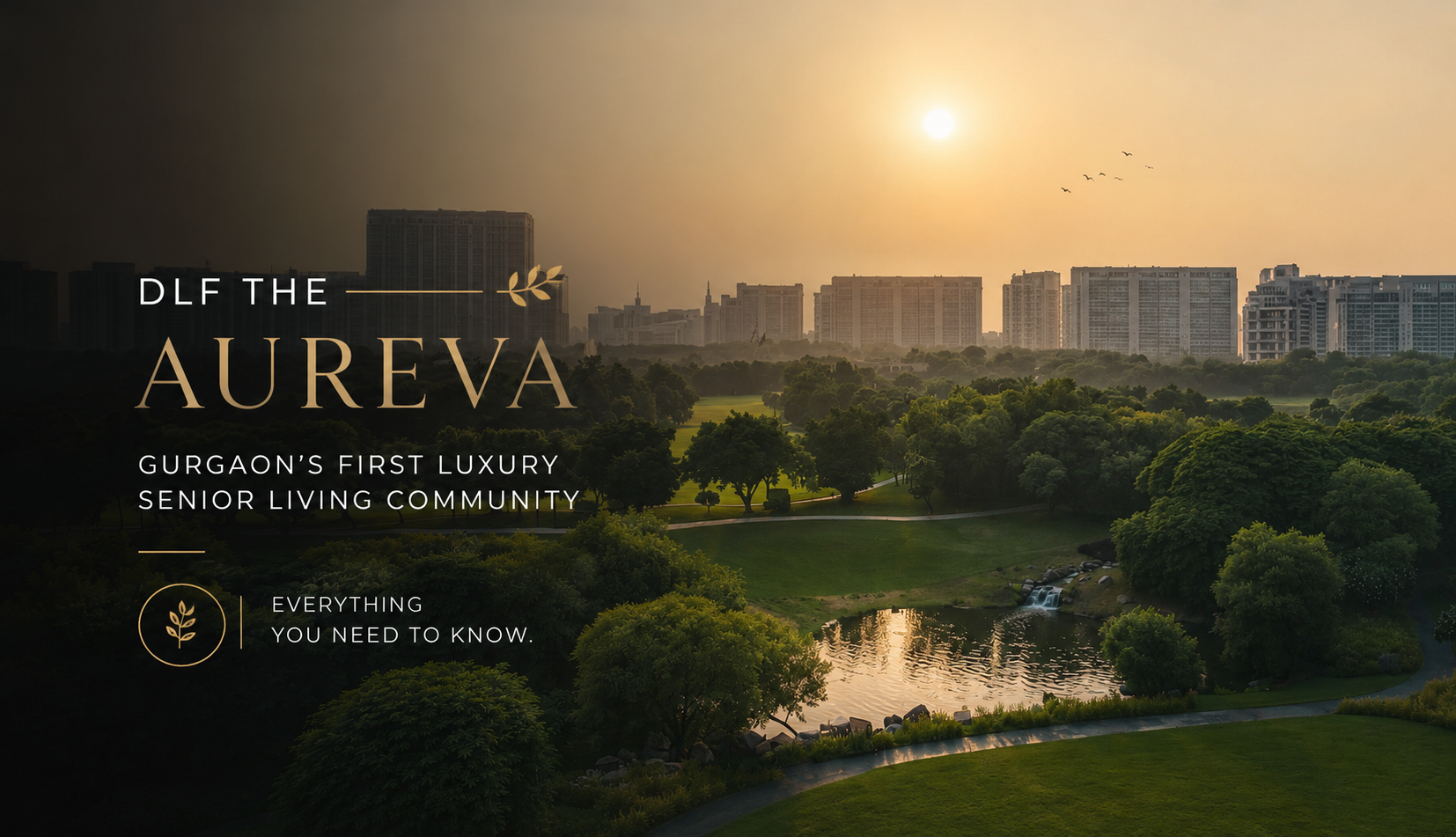
DLF The Aureva: Gurgaon First Luxury Senior Living Community Everything You Need to Know
Jul 05, 2026
DLF The Aureva Gurgaon: Best Senior Living Home for Parents
Jul 24, 2026
DLF The Aureva: The Future of Wellness Living for Seniors
Jul 24, 2026